Syracuse Puppet Show Guide
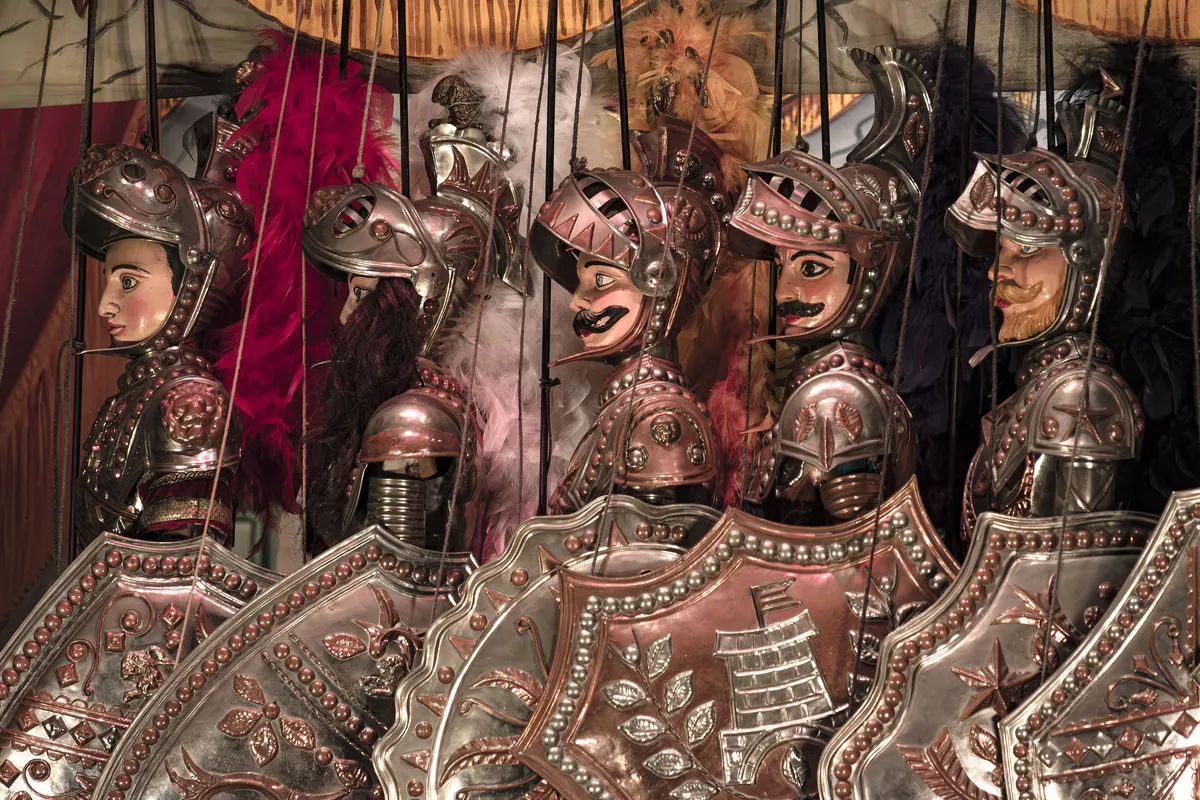
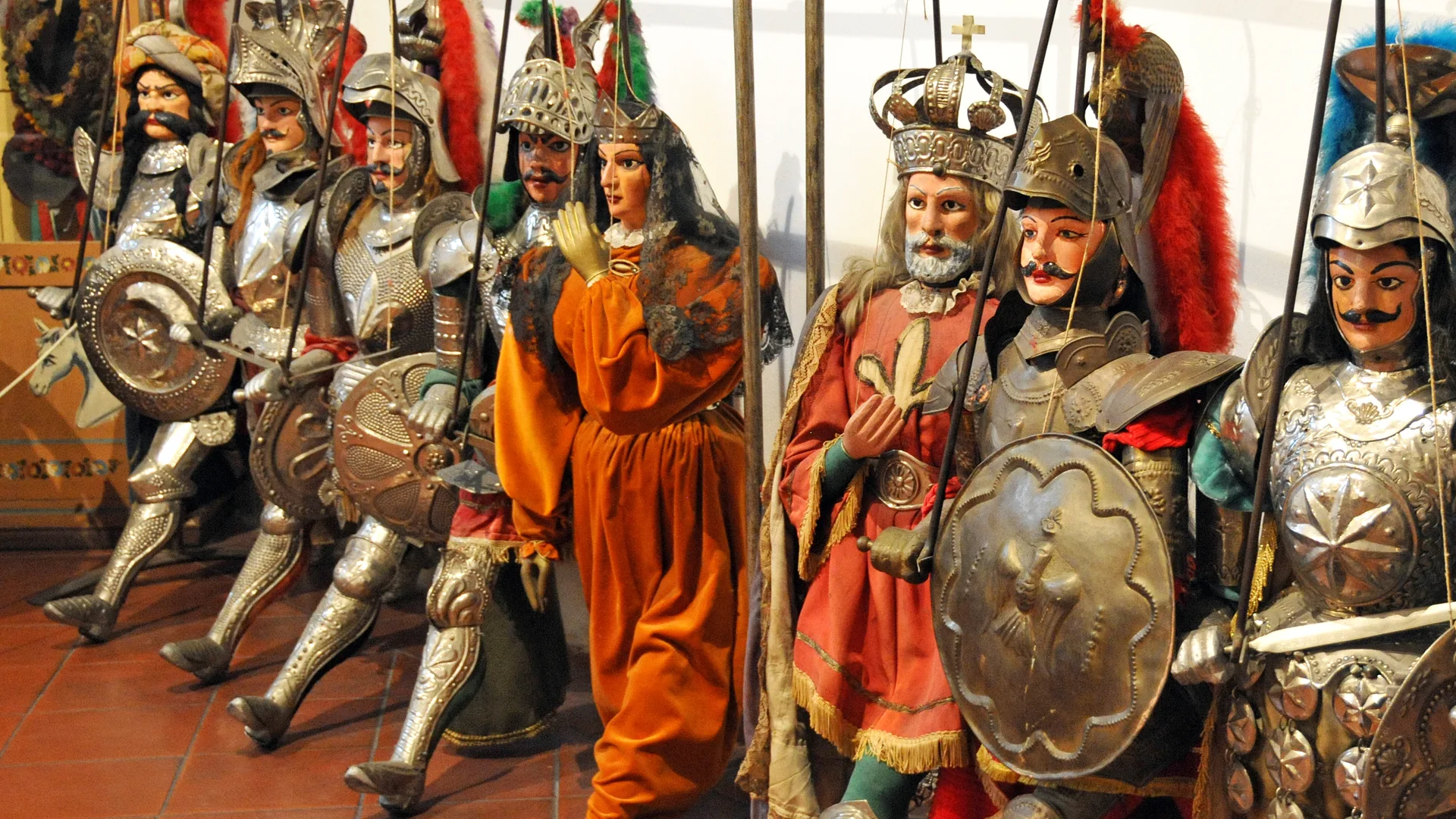
Sicilian string puppets in hammered metal armour stand in a row on their rods, with a crowned, white-bearded king and a lady in a velvet gown among the knights

Ortigia · Syracuse

Watch paladins clash in a Sicilian puppet duel

4.8 (68 verified reviews · GetYourGuide)

Carved wooden knights fight out the tales of Charlemagne's paladins in a Syracuse puppet theatre, with a look backstage on the same ticket.

The armour is real metal, hammered by hand, and backstage you get to hold a puppet.

Answering the Italian question

Is the Syracuse puppet theatre worth it if you don't speak Italian?

In short: Yes, for most visitors, and the language matters less than you might fear. The show is Opera dei Pupi, Sicily's theatre of armoured string puppets, and it is performed only in Italian. What carries you through without the words is the action: carved knights in metal armour, sword fights and fast battle scenes, music under it all and the odd dragon, in a story taken from the legends of Charlemagne's paladins. The English comes in the guided visit behind the stage, where the workings are explained and you can try holding a puppet. The whole visit lasts around ninety minutes and works well for children.

What it is

A seat in a small puppet theatre in Ortigia, the old island centre of Syracuse, for a performance in a tradition UNESCO lists as intangible heritage, together with a guided look behind the stage. You meet at the theatre about fifteen minutes before the show begins.

What it isn't

It is not performed in English, and it is not a large modern stage production; the theatre is small and the art is old. Nothing to eat or drink comes with the seat, and transport to the door is your own affair. The episode on stage is the theatre's choice, not something you pick.

Who fights on the little stage

The paladins of the pupi stage

Pupi theatres take their stories from the Carolingian cycle, the medieval legends of Charlemagne and his knights, as the Italian Renaissance poets retold them. Below are eight characters you are likely to meet, as the sources describe them. None of this is the theatre's own programme, which is its to choose and changes through the season.

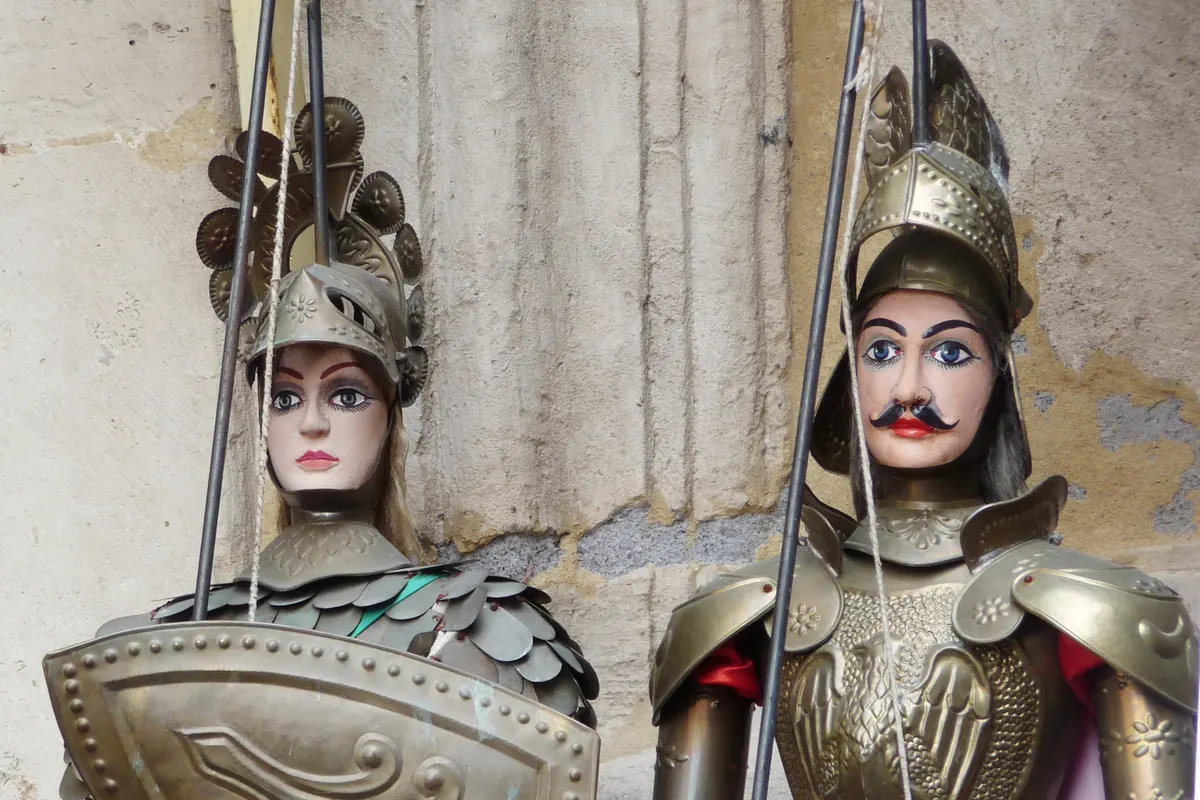
Two Sicilian string puppets in armour, a woman knight with a scaled shoulder guard and a moustached knight, hanging by their iron rods against a stone wall
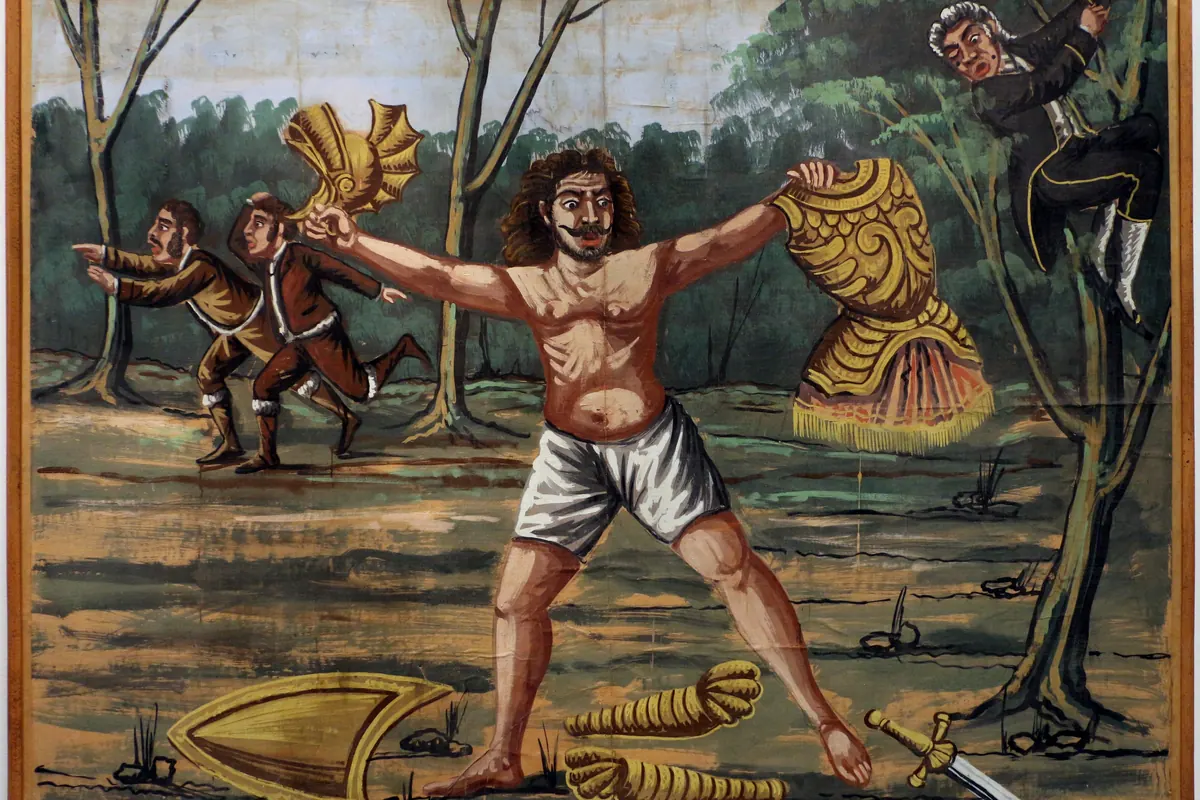
A painted puppet-theatre poster in which a bare-chested, wild-haired Orlando stands with arms flung wide while his armour and shield lie on the ground and small figures flee
  1. The emperor

    Charlemagne

    The real Charlemagne was King of the Franks from 768 and was crowned emperor in Rome in 800. On the pupi stage he is the crowned lord the Christian knights serve: the Opera dei Pupi counts the paladins in the service of Emperor Charlemagne among its main characters.

  2. The champion

    Orlando

    Orlando is the Italian name of Roland, the Frankish commander killed at Roncevaux Pass in 778 who became the hero of the eleventh-century Song of Roland. Legend gives him the sword Durendal and an oliphant horn. In Orlando furioso his love for the princess Angelica drives him out of his mind.

  3. The rebel cousin

    Rinaldo

    Rinaldo is the Italian form of Renaud de Montauban, one of the Four Sons of Aymon in a twelfth-century French chanson de geste. He flees Charlemagne's court after killing one of the emperor's nephews in a brawl and fights a long war before peace is made. He rides the enchanted horse Bayard, and in the Italian poems he is Orlando's cousin.

  4. The princess

    Angelica

    Boiardo brings Angelica to Charlemagne's court as a princess from Cathay, and every knight falls for her, the cousins Orlando and Rinaldo above all. In Ariosto's sequel she is pursued across the world and finally marries Medoro, an ordinary soldier, and the news of that marriage is what drives Orlando mad.

  5. The knight in white

    Bradamante

    Rinaldo's sister and a Christian knight in Charlemagne's service, Bradamante wears white, carries a white shield and wields a magic lance that unhorses anyone it touches. Her long, often interrupted love for the Saracen warrior Ruggiero is one of the main threads of Orlando furioso.

  6. The convert

    Ruggiero

    Raised in Africa by the wizard Atlante as a Saracen warrior, Ruggiero joins the invasion of France, crosses swords with both Orlando and Rinaldo, and falls for Bradamante. He converts and marries her, and the poets made him the forefather of their patrons, the Este family of Ferrara.

  7. The braggart

    Rodomonte

    King of Sarza and Algiers, Rodomonte leads the Saracen army that besieges Charlemagne in Paris, and his boasting is as famous as his strength: his name is the source of the word rodomontade. He dies in a duel with Ruggiero at the wedding. Pupi Saracens wear trousers and turbans, with half moons and stars on their armour.

  8. The traitor

    Gano

    Gano di Maganza is the Italian Ganelon, the baron who betrays Charlemagne's army to the Saracens in the Song of Roland and so brings on the ambush at Roncevaux. The treachery of his house of Maganza became a byword in Italy, and the Opera dei Pupi keeps him in its cast as Gano the traitor.

Sources: English Wikipedia articles on the Opera dei Pupi, the Matter of France, Charlemagne, Roland, the Song of Roland, Orlando Furioso, Renaud de Montauban, Angelica, Bradamante, Ruggiero, Rodomonte and Ganelon.

Show and backstage

What the hour and a half holds

Curtain times shift through the year; check yours in the date picker and again on your voucher. The episode on stage is the theatre's to choose. Below is the shape every visit shares, not a programme.

  1. Arriving

    At the theatre door

    Be at the theatre in Ortigia about fifteen minutes before the show begins. It is a small house, and taking your seat in good time keeps the start calm for everyone.

  2. On stage

    A tale of the paladins, told in Italian

    Wooden knights in rich costume and armour act out a chivalric story of the kind found in the Song of Roland and Orlando furioso: duels, fast battle scenes, music behind the action and creatures such as dragons breaking into the plot. Every word is in Italian.

  3. Behind the stage

    How the pupi are worked

    A guide takes you behind the stage and explains, in English or Italian, how the art works and why it matters to Sicily. You get the chance to hold a puppet yourself and feel what the handlers carry.

  4. Afterwards

    Back into Ortigia

    You come out into the old town of Ortigia with the evening still ahead. Food and drink are yours to arrange, since neither is part of the ticket.

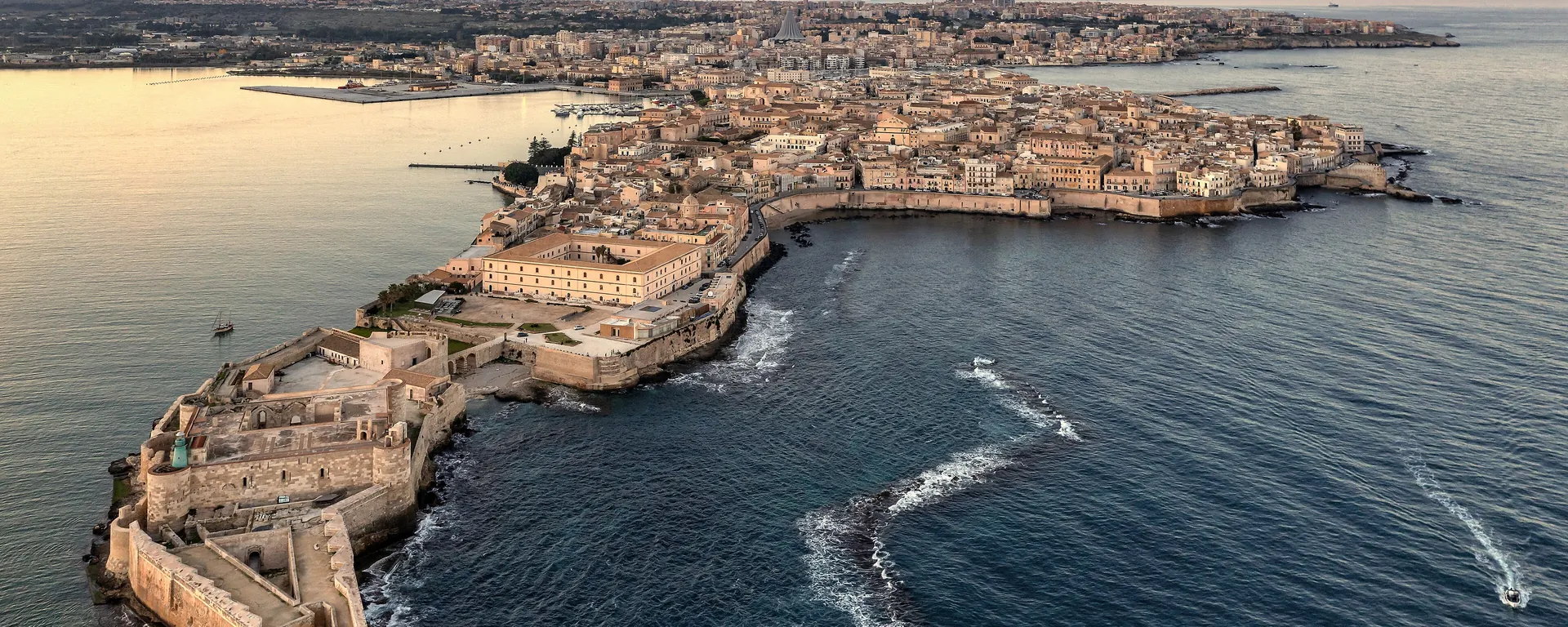
The island of Ortigia seen from the air at sunset, its castle at the seaward tip and the rest of Syracuse and the hills stretching away behind

Eight centuries of the same quarrel

From Roncevaux to UNESCO in six dates

The stories the pupi tell are centuries older than the theatres that stage them. Each date below comes from the sources listed at the end; where two of them differ, both are given.

  1. 778

    A rearguard falls

    Roland, Charlemagne's governor of the Breton March, died with the Frankish rearguard when the Basques ambushed it at the Battle of Roncevaux Pass in 778. A passage in Einhard's life of Charlemagne is the only historical record of him; the rest is legend.

  2. 11th c.

    The Song of Roland

    An Old French epic of the eleventh century turned that defeat into a hero's last stand. The Song of Roland, about 4,000 lines long, is the oldest surviving major work of French literature.

  3. 1516

    Orlando loses his mind

    Ludovico Ariosto published the first version of Orlando furioso in 1516, carrying on Boiardo's unfinished Orlando innamorato. The complete poem appeared in 1532, full of sorcerers, a sea monster and a flying hippogriff.

  4. 1800s

    Puppets in armour

    UNESCO dates the Opera dei Pupi to the beginning of the nineteenth century; English Wikipedia says it goes back to the third decade of that century. Puppets without armour came first, and the chivalric stories then pushed the rest of the repertoire aside.

  5. 1858

    A serial of paladins

    From 1858 Giusto Lo Dico's History of the Paladins of France came out in instalments: a prose reworking of the Italian Renaissance chivalric poems in which the stories the puppeteers stage were gathered.

  6. 2008

    On UNESCO's list

    Named by UNESCO in 2001 among the masterpieces of humanity's oral and intangible heritage, the Opera dei Pupi was inscribed on UNESCO's Representative List in 2008. UNESCO calls it the only example of an uninterrupted tradition of this kind of theatre.

Sources: English Wikipedia (Roland; The Song of Roland; Orlando Furioso; Opera dei Pupi) and UNESCO's Intangible Cultural Heritage page on the Opera dei Pupi.

What the pupi ticket covers

Inside the ticket, and outside it

The terms worth knowing before you pay, in one list.

The theatre
Teatro dei Pupi - Siracusa, a small traditional puppet theatre in Ortigia, the old island centre of Syracuse.
Who sells it
The ticket is sold on GetYourGuide by Empeeria, a reseller, rather than by the theatre's own box office.
Included
Your seat at the puppet show and a guided visit behind the stage.
Not included
Food, drinks, and getting to and from the theatre.
Length
Roughly ninety minutes, show and backstage together.
Language
The show is performed only in Italian. The guide behind the stage speaks Italian and English.
Children
Toddlers up to two years old enter free of charge.
Showtimes
They vary by season. The calendar shows each date's time, and so does your voucher.
Arriving
Be at the theatre about fifteen minutes before the show begins.
Paying and cancelling
Reserve without paying yet; cancelling through GetYourGuide 24 hours or more before the show brings all your money back.

Puppets or the sea

The pupi or the sunset cruise

Puppet show
Sunset cruise
Length
Roughly ninety minutes
Roughly two hours
Where
A small theatre in Ortigia
On the sea around Ortigia
Language
Show in Italian; backstage in English or Italian
Live guide in Italian, English or Spanish
Included
Show and backstage visit
Prosecco and a Sicilian platter
Weather
Indoors, whatever the sky
The sea shapes the route
Swimming
None
A stop near the castle
Cancel free
Until a day before
Until a day before

The pupi first, then the rest of Syracuse

Pupi, a sunset boat, the Greek theatre and street food

The puppet theatre is the first card. Beside it sit the sunset boat trip it is weighed against below, a morning among the Greek and Roman ruins of the Neapolis park, and an evening walk through Ortigia tasting street food. Each card opens the dates for that outing only.

Puppet show with a backstage visit

4.8 · 68 reviews · From US$69

An Opera dei Pupi performance in Italian of a tale from Charlemagne's paladins, with armoured wooden knights, fast battles and music, plus a guided visit behind the stage with a guide who speaks English and Italian. About an hour and a half; under-twos go in free.

Open this outing's dates ↗

Ortigia sunset cruise with aperitif

4.8 · 390 reviews · From US$67

Two hours by boat along the Ortigia coast and into its sea caves, a stop to swim near the castle, prosecco and a platter of Sicilian produce on board, and the sun going down on the way back. Itineraries can change.

Open this outing's dates ↗

Neapolis and the Greek theatre

4.6 · 305 reviews · From US$33

A two-hour guided walk through the Neapolis archaeological park, park entry included: the old stone quarries, the Ear of Dionysius, the Greek theatre and the Roman amphitheatre. The guiding is in English and Italian, sometimes both on the same tour.

Open this outing's dates ↗

Ortigia street-food walk

4.9 · 425 reviews · From US$69

Three hours on foot with a guide and a group of no more than twelve, tasting Sicilian street food at four or more stops, with water and one alcoholic drink, usually local wine. Tastings follow the season. Not suitable for anyone with limited mobility.

Open this outing's dates ↗

Choose a date for the pupi

Showtimes move with the season, so each date lists its own. Set your currency to see the full total before you pay. Seats can be held without paying now, and cancelling at least 24 hours ahead refunds the lot.

More to book in Syracuse

Everything bookable in Syracuse ↗

Before you cross to Ortigia

Reaching Ortigia, and the small print

Where it is

The theatre is in Ortigia, the small island that forms the historic centre of Syracuse. Your voucher names the meeting point, which is the theatre itself.

On foot

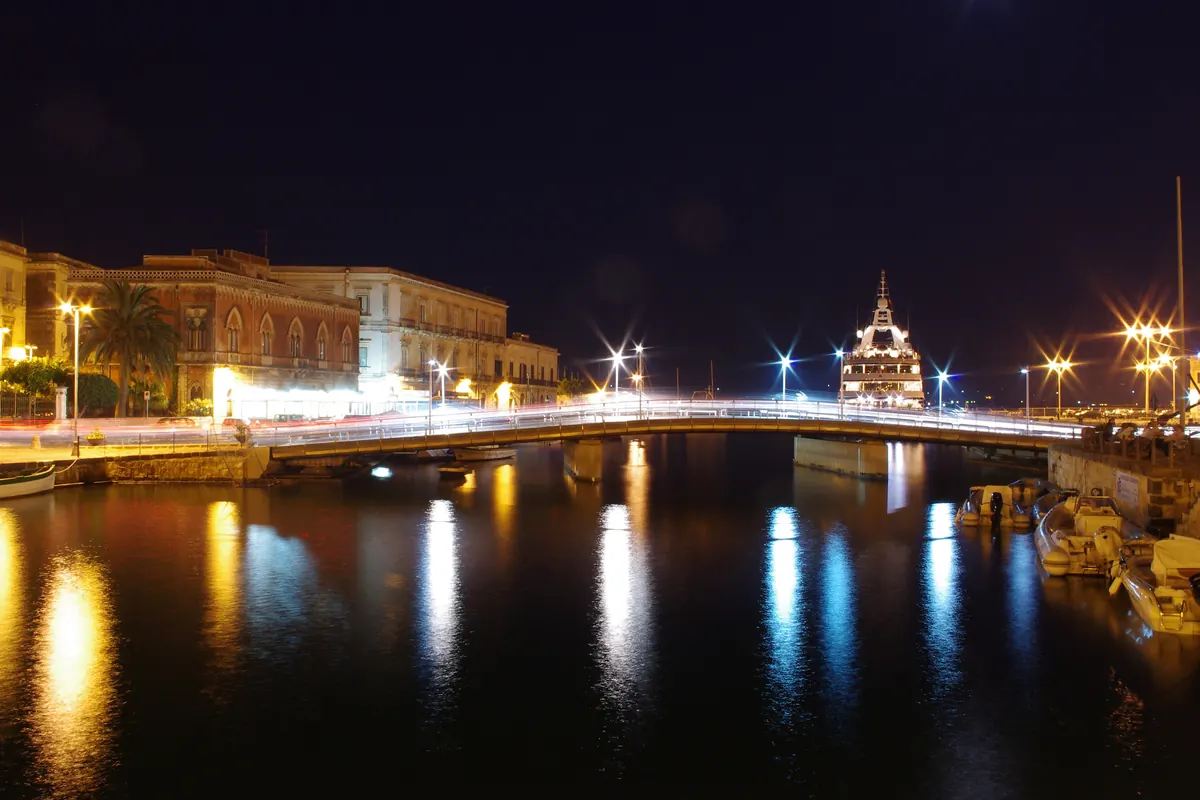
Two bridges join Ortigia to the rest of the city, and the grander of them is the Umbertino Bridge, named after King Umberto I. Walk across either and you are on the island.

Timing

Showtimes vary by season. Go by the time on your voucher, and be at the theatre about fifteen minutes before the show begins.

Children

Under-threes need no ticket of their own. For older ones the duels, music and monsters need no translation, and holding a puppet behind the stage is a good reason to bring them.

Without Italian

Read this site's guide to the paladins first. Knowing who Orlando, Rinaldo, Angelica and Gano are turns the clashing armour into a plot you can follow.

Food and drink

Neither comes with the ticket. Have dinner in Ortigia before the show or once it ends; the street-food walk on this page is one way to build an evening around the show.

FAQ

What people ask before the curtain opens

Is the Syracuse puppet show worth it if I don't speak Italian?

Yes, for most visitors. The show is in Italian, but the story is carried largely by action: armoured knights duel, battles move fast, music runs underneath and monsters burst in. The guided visit behind the stage is in English, and reading up on the paladins beforehand helps a great deal.

Is any part of it in English?

Yes, the part behind the stage. The guide speaks English as well as Italian, so the explanations of how the pupi work can be in English. The performance itself is given only in Italian.

How long is the whole thing?

Roughly ninety minutes, the performance and the backstage visit combined. Showtimes vary by season; the booking calendar and your voucher give the start, and you should be at the theatre about fifteen minutes before.

Can I hold a puppet, and how heavy is it?

Yes, the backstage visit gives you the chance to try. English Wikipedia describes Syracuse puppets as close to the Catania type in size and weight, and Catania puppets as 110 to 130 cm tall and as heavy as about 30 kilos.

Is it suitable for children?

Yes. Children aged two and under go in without paying, and sword fights, music and dragons are the kind of action children follow without words. An hour and a half is a fair stretch for a toddler, so choose a date when yours is rested.

What is the Opera dei Pupi?

Sicily's traditional theatre of armoured string puppets, which stages the legends of Charlemagne's paladins drawn from medieval and Renaissance poems. UNESCO first honoured it in 2001 and added it to its intangible heritage list in 2008.

Where exactly is the theatre?

In Ortigia, the island that is the old centre of Syracuse. Two bridges link Ortigia to the rest of the city, the Umbertino Bridge being the grander; cross on foot. Your voucher gives the meeting point at the theatre.

Is there anything to eat or drink?

Nothing is served with this ticket: it pays for the performance and the backstage visit only. Transport to the theatre is not part of it either.

What if my plans change?

Call it off through GetYourGuide a full 24 hours or more before the show and the whole sum is refunded. Reserving does not require paying straight away.

Is this the theatre's website?

No. This is an independent guide, written separately from the theatre and from the company that resells its tickets, and it is not affiliated with either. Any booking you start on these pages is completed on GetYourGuide, which may pay this site a commission while your price stays exactly as shown.
Wooden knights, real metal, an old story told in Italian, and a turn behind the curtain to see how it is done.

Find a puppet show date ↗
Pick your puppet nightHold seats now, pay nearer the day